Loading...
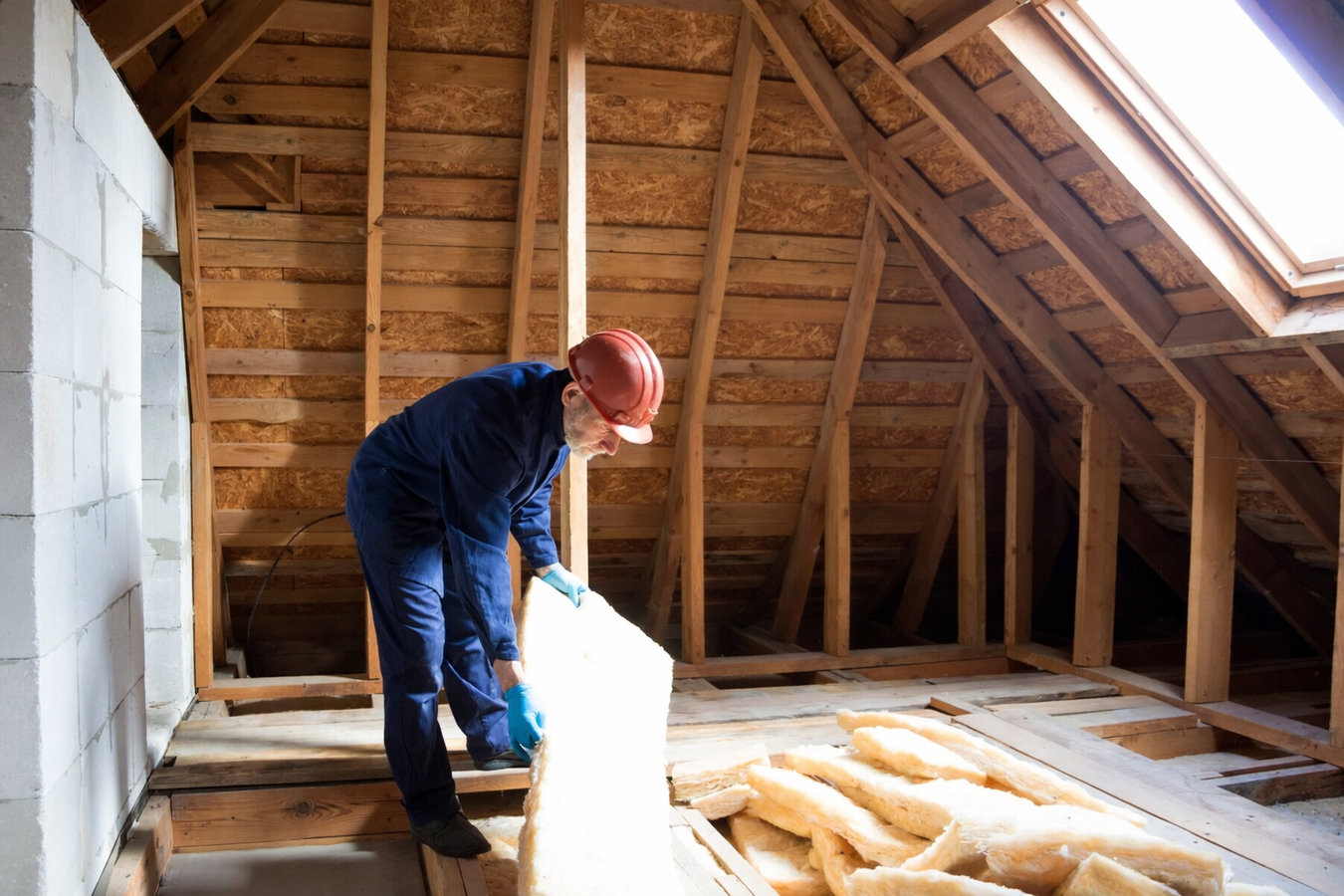
Hidden gaps in your attic floor let heat escape all winter long. We seal them so your furnace stops working overtime and your home stays warmer.
Attic air sealing in Bettendorf means finding and plugging the hidden gaps in your attic floor that let conditioned air escape - most homes are finished in a single day with no disruption to your living space.
These openings hide around light fixtures, plumbing pipes, the tops of interior walls, and attic hatches. They are invisible from below but work like a chimney all winter - warm air rises, pushes through every crack, and escapes into the cold attic above. The result is a furnace that runs constantly but never quite catches up. Attic air sealing stops that cycle before adding more insulation material on top.
Many Bettendorf homeowners combine this service with whole-home air sealing services to address leakage points throughout the house, not just the attic floor. If your home has inadequate insulation as well, pairing air sealing with an insulation upgrade in the same visit is the most cost-effective approach.
If your gas bill climbs sharply from October through March and stays high even when you keep the thermostat steady, your home is likely losing heat through the attic floor. Bettendorf winters are long and cold enough that even moderate air leakage adds up to real money. A furnace that runs almost constantly but never quite keeps up is a clear signal that heat is escaping somewhere above.
Bedrooms and hallways on the upper floor that feel noticeably colder than the rest of the house in winter are a strong indicator of air moving through the ceiling. This is especially common in Bettendorf homes built before 1980, where the tops of interior walls were rarely sealed before insulation was added. The draft you feel near recessed lights or along the ceiling edge is air leakage in progress.
When warm, moist air from your living space escapes into a cold attic, it can condense and freeze on the surfaces it contacts. If you have ever opened your attic hatch in winter and seen frost on the back of the door or nearby framing, that is a direct sign that air is moving freely between your living space and the cold attic above it.
If you can go into your attic and see light coming through gaps around pipes, wires, or light fixtures - or feel a breeze near the attic hatch - those are open gaps that should be sealed. These openings are exactly what attic air sealing addresses, and they are more common in Bettendorf homes than most owners expect when they first look.
We seal every penetration in the attic floor - light fixtures, exhaust fans, the tops of interior walls, plumbing and electrical chases, and the attic hatch itself. A contractor who only seals the obvious spots and skips the hidden ones leaves most of the air leakage in place. Our crew works from a checklist and photographs the penetrations addressed so you have a record of what was done. We also pair attic air sealing with retrofit insulation when existing material needs to be topped off after sealing is complete.
For homeowners dealing with moisture problems in the attic as well as air leakage, we can coordinate with crawl space work since the same stack effect that pulls heat up also pulls humid air in. We help you understand whether your project qualifies for MidAmerican Energy rebates or federal tax credits before work begins, so you have the right documentation from day one.
Best for homes with existing insulation where gaps around penetrations are the primary source of heat loss.
Right call when the attic floor has gaps and the insulation depth is also below current recommended levels.
Targeted fix for homes where the pull-down stair or ceiling panel is the biggest air leakage point.
For homeowners who want a measurable before-and-after result rather than a verbal assurance that the work was thorough.
Bettendorf sits in Climate Zone 5A, where attic temperatures can swing from well above 100 degrees in July to below zero in January. That kind of range puts constant pressure on every gap in the attic floor. A significant share of Bettendorf homes - particularly the established neighborhoods near the Mississippi River and subdivisions along the Middle Road corridor - were built in the 1950s through 1970s, before energy codes required tight construction. Those homes have far more penetrations and hidden gaps than anything built in the last 20 years, and they benefit the most from thorough sealing work. Natural gas is the dominant heating fuel in Scott County, and MidAmerican Energy serves most of Bettendorf, so the savings from a tighter attic show up directly on your monthly bill.
Homeowners in Davenport and Rock Island face the same Climate Zone 5A conditions and older housing mix. The high summer humidity near the Mississippi River adds a moisture dimension as well - warm, humid air that finds its way into an unsealed attic can condense on cooler surfaces and create conditions that lead to wood damage or mold. A contractor who understands this local condition seals with that moisture risk in mind, not just energy savings.
We ask a few basic questions - your home's age, whether you have existing insulation in the attic, and what is prompting you to call. This takes about five minutes and helps us give you a realistic sense of cost and timing. We respond within 1 business day.
A technician visits to look at the attic in person. They check the size of the space, existing insulation, and identify the main sources of air leakage - gaps around pipes, light fixtures, wall tops, and the attic hatch. This visit usually takes 30 to 60 minutes and is the basis for your written estimate.
After the assessment you receive a written estimate breaking down what work will be done and what it costs. We explain what we found and why we are recommending what we are. Once you approve, we schedule the work day - typically one to two weeks out during busy seasons.
The crew accesses your attic, moves existing insulation aside, and systematically seals every gap with foam and caulk. Your living space is not disturbed. Most Bettendorf homes are complete in four to six hours. Insulation is replaced before the crew leaves.
We respond within 1 business day. No obligation after your estimate. After you submit, someone from our team calls to schedule a free in-home assessment at a time that works for you.
(563) 206-5388We live and work in the Quad Cities. We know the housing stock near the river, the permit requirements at Bettendorf's building department, and the local climate pressures that make a thorough attic seal worth more here than in milder regions.
A thorough attic seal covers not just the obvious spots but every pipe, wire, fixture, and wall top in the attic floor. We photograph the penetrations we address so you have a written and visual record of what was done - not just a verbal assurance.
MidAmerican Energy and Alliant Energy both offer rebate programs for qualifying work in the Bettendorf area. We help you understand what your project qualifies for and provide the documentation you need to apply - before work starts, not after.
We handle permit applications when your project requires them and leave you with a documented record of the work. The crew that gives you the estimate is the crew that shows up and does the job.
Attic air sealing is a permanent fix - it is worth doing once and doing it right. The Building Performance Institute sets the national standard for this kind of work, and every job we do is held to that bar.
Add blown-in or foam insulation to your attic, walls, and crawl space without major disruption - the right follow-up after air sealing gaps are closed.
Learn moreWhole-home air sealing that goes beyond the attic to address leakage at rim joists, basement walls, and other paths cold air uses to get inside.
Learn moreBettendorf winters are long - the sooner the attic is sealed, the more of this season you save. Call for a free estimate today.