
Loading...
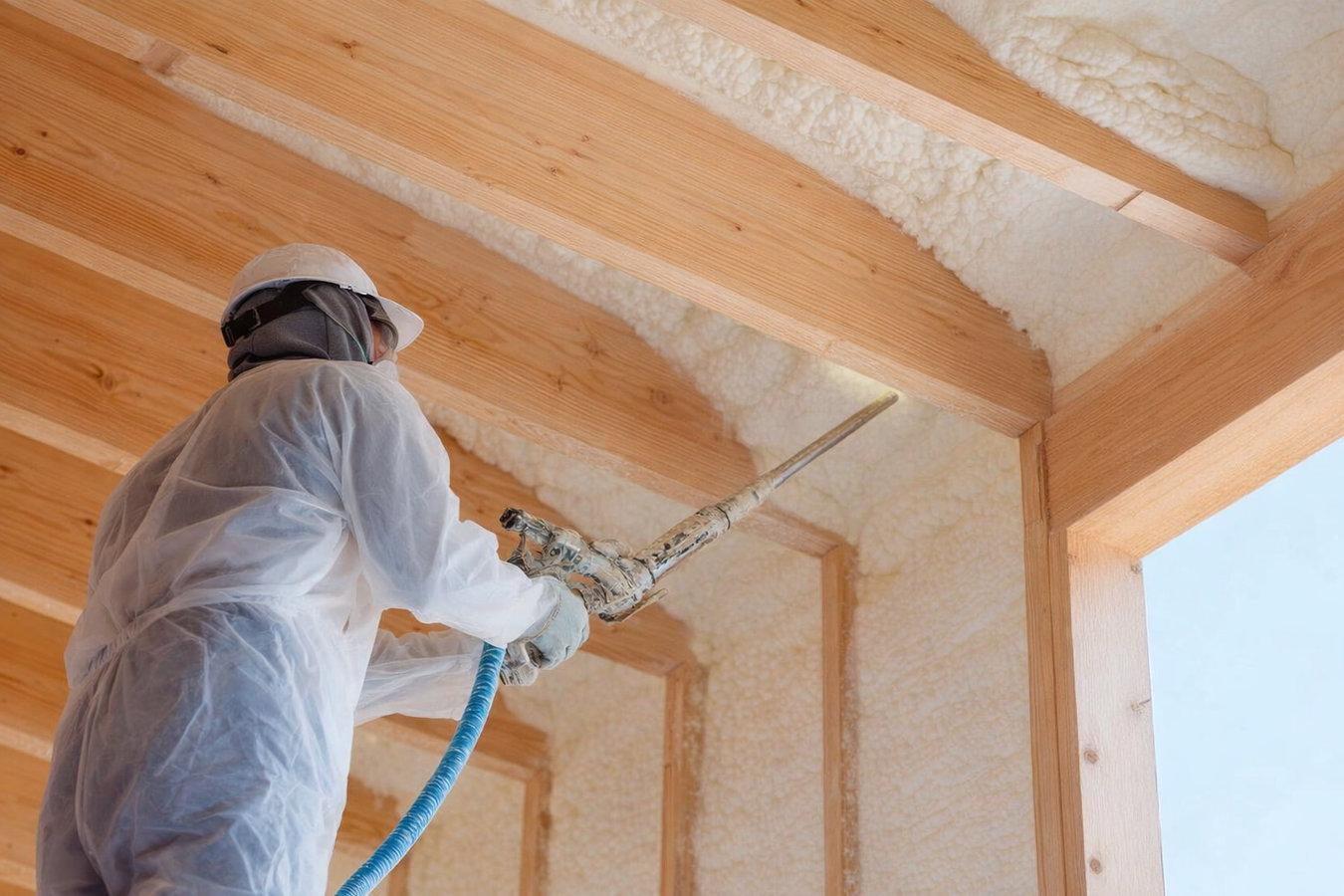
Bettendorf Insulation provides insulation contractor services in Dubuque, IA - spray foam insulation, attic insulation, and crawl space insulation - and has served Dubuque homeowners since 2024, working on everything from century-old hillside homes to postwar brick bungalows.
Dubuque homes built in the 1800s and early 1900s were never designed to handle modern heating loads, and their crawl spaces, rim joists, and attic knee walls leak conditioned air freely. Closed-cell spray foam insulation fills those gaps completely and adds a moisture barrier critical for homes on Dubuque's river-facing hillsides, where humidity and water runoff are real seasonal concerns.
Dubuque averages 40 inches of snow per year, and the heat that escapes through an under-insulated attic is the main driver behind ice dams at the roofline - a recurring problem in older Dubuque neighborhoods. Bringing attic insulation up to recommended depth for Iowa climate zone conditions stops that heat loss at the source and protects both your roof and your heating bill through the long northern Iowa winter.
Many Dubuque homes on hillside lots have crawl spaces that face both cold air in winter and high moisture in summer from surrounding soil and hillside drainage. Insulating the crawl space walls and sealing the rim joists keeps the floor system above dry and warm year-round, eliminating the musty smell and cold floors that are common complaints from homeowners in the Cable Car Square and West End neighborhoods.
Dubuque sits on bluffs above the Mississippi, and the freeze-thaw cycles that hit the city dozens of times each year push moisture through foundation walls in older homes. Insulating basement walls on the interior creates a thermal barrier and reduces the condensation that accumulates on cold concrete during humid Iowa summers - a key step in keeping older Dubuque foundations dry and livable.
Victorian and Italianate homes throughout Dubuque have plaster walls, original wood framing, and decades of settling that open gaps around pipes, wires, and ceiling penetrations. Air sealing those pathways before adding insulation is what separates a job that actually cuts your bills from one that just adds material. In a city where January wind chills can drop temperatures to dangerous lows, sealing those leaks matters.
Dubuque is one of the oldest cities in Iowa, and a large share of its housing stock was built before 1940 - some of it well before. These homes were constructed with true-dimension lumber, plaster walls, and insulation approaches that made sense at the time but fall far short of what Iowa winters now demand. Pre-war construction in the hillside neighborhoods near downtown means cavity walls that were never insulated, crawl spaces with stone or brick foundations, and attics that have been accumulating decades of degraded material. The age and style of the housing stock here requires a contractor who knows how to work around original finishes without damaging them.
Climate plays a separate but equally important role. Dubuque averages around 40 inches of snow and regularly sees below-zero temperatures in January and February. Frost depth can reach 40 to 60 inches in a hard winter, meaning the ground itself becomes a source of cold that drives upward into crawl spaces and basements. At the same time, Dubuque summers are humid - the Mississippi River keeps dew points elevated from June through August, creating moisture pressure from the outside in. An insulation contractor working here has to solve for both extremes, often in the same building.
Our crew has worked on homes throughout Dubuque, pulling permits through the City of Dubuque Building Services department for projects that require them. The Victorian and Italianate homes near Cable Car Square are a category of their own - tight access hatches, irregular framing, and original plaster ceilings that you cannot damage. We approach those jobs differently than the postwar ranch homes on the west side of the city, where open attics and standard framing make blown-in insulation straightforward.
Dubuque is widely known as the "Masterpiece on the Mississippi," and the bluff neighborhoods above the riverfront - the areas near the Fenelon Place Elevator and the hillside streets leading down toward the National Mississippi River Museum and Aquarium - have some of the oldest housing in Iowa. Steep lots and stone foundations are common, and hillside drainage means crawl spaces here see more moisture than properties on flat ground. US-20 connects the city east to west across the bluffs, and the crew navigates the hillside streets between jobs on a regular basis.
We also serve homeowners in Cedar Rapids, IA and Clinton, IA, which gives us regular coverage across the eastern Iowa corridor. If you have neighbors or family in either city looking for insulation help, we are already working there.
We ask a few basic questions - your home's age, the area you want insulated, and what is prompting you to call. Older Dubuque homes often have details that affect the job, so knowing upfront helps us come prepared. We respond within 1 business day.
A technician visits your home and looks at the actual space - attic, crawl space, rim joists, or walls. For older Dubuque homes this step is especially important: access points, existing materials, and moisture conditions all affect what we recommend and what it will cost. You get a written estimate before any work is scheduled.
If your project requires a permit from the City of Dubuque Building Services, we handle the application. You do not need to navigate that process yourself. We confirm the schedule, tell you what to clear from the work area, and let you know if you need to be home during the job.
The crew completes the work and cleans up before leaving. For spray foam jobs, you will need to stay out of the treated area for at least 24 hours while the foam cures. For blown-in attic work, there is no wait time - the space is usable immediately after the crew finishes.
We serve Dubuque homeowners across the hillside neighborhoods and west side - call or request a free estimate and we will respond within 1 business day.
(563) 206-5388Dubuque is one of the oldest cities in Iowa, built on a series of steep bluffs rising above the Mississippi River. With roughly 60,000 residents, it is the eighth-largest city in the state and carries a strong sense of identity tied to its 19th-century architecture and riverfront character. The city markets itself as the "Masterpiece on the Mississippi," and the name fits - the hillside neighborhoods near downtown are dense with Victorian, Italianate, and Queen Anne homes, many of which have survived for over 100 years. The housing stock near Cable Car Square and along the bluffs above downtown is the oldest in the city, while newer residential development on the west and southwest sides reflects postwar and contemporary construction. About 60 percent of housing units are owner-occupied, which means most Dubuque homeowners have a long-term stake in how their properties hold up.
Major employers including John Deere Financial, IBM, and Mercy Medical Center keep the local workforce stable, and many residents have lived in Dubuque for years or decades. The city is home to the Fenelon Place Elevator, billed as the world's shortest and steepest scenic railway, and the National Mississippi River Museum and Aquarium - both well-known to anyone who has spent time in the city. Nearby, Cedar Rapids, IA is the next major Iowa city to the west, and we serve homeowners there as well. For those on the northern Iowa side, Clinton, IA is another river city where we regularly complete insulation projects.
High-performance spray foam that seals and insulates in one step for maximum energy efficiency.
Learn moreKeep your home comfortable year-round with professional attic insulation installation.
Learn moreLoose-fill insulation blown into walls, attics, and cavities for complete, even coverage.
Learn moreWhole-home insulation solutions designed to reduce energy bills and improve comfort.
Learn moreSafe and thorough removal of old, damaged, or contaminated insulation from any area.
Learn moreInsulate your crawl space to prevent moisture, mold, and energy loss from below.
Learn moreRetrofit wall insulation improves thermal performance without major renovation.
Learn moreEliminate drafts and air leaks that undermine your insulation and raise energy costs.
Learn moreProperly insulated basements stay drier, warmer, and more energy-efficient all year.
Learn moreDense, rigid closed-cell foam delivers the highest R-value per inch and a vapor barrier.
Learn moreLightweight open-cell foam fills irregular cavities and provides excellent sound dampening.
Learn moreCommercial-grade insulation for offices, warehouses, and industrial facilities of any size.
Learn moreHeavy-duty vapor barriers block ground moisture and protect your crawl space structure.
Learn moreProfessional vapor barrier installation prevents condensation damage in walls and floors.
Learn moreSeal attic bypasses to stop conditioned air from escaping and unconditioned air from entering.
Learn moreAdd insulation to existing homes with minimal disruption using retrofit-friendly methods.
Learn moreCall us or send a message and we will respond within 1 business day. We work on homes throughout Dubuque, from the bluff neighborhoods near downtown to the newer west-side subdivisions.