Loading...
Bettendorf Insulation is an insulation contractor serving Moline, IL with commercial insulation, attic insulation, and spray foam insulation - and our experienced crew has been working across Moline since 2024, including the Craftsman bungalows and Foursquares in central neighborhoods that need a different approach than newer construction.
Moline has a strong commercial and industrial base, and many of the older buildings along the riverfront and downtown corridors were built well before current energy codes were in place. Our commercial insulation work addresses the gaps those older buildings carry - compacted or missing insulation, unsealed penetrations, and rooflines that bleed heat all winter long - so your heating and cooling costs actually come down.
Most Moline homes were built before 1960, and attic insulation in homes of that era is often settled, thinned, or simply never upgraded. The Department of Energy recommends R-49 to R-60 for this Illinois climate zone - a number most pre-1990 Moline attics do not come close to. Upgrading attic insulation is usually the single most cost-effective change a Moline homeowner can make to their winter heating bill.
The Craftsman bungalows and Foursquares that fill central Moline neighborhoods have framing from a century or more ago - and the gaps around pipes, wire runs, and wall tops in those homes are impossible to seal with standard batts alone. Closed-cell spray foam fills and seals at the same time, which makes it the most reliable choice for rim joists and crawl space walls in Moline homes of this age.
Moline sits on clay-heavy glacial soil that holds water after heavy rain and shifts with each freeze-thaw cycle. That combination pushes moisture into uninsulated crawl spaces year-round. Insulating and sealing the crawl space protects floor temperatures in winter and reduces the humidity that drives mold growth in Moline homes during hot, sticky Illinois summers.
For Moline homeowners with an existing attic that just needs to be brought up to current depth, blown-in insulation is the fastest and most affordable option. The machine stays outside, a hose runs up into the attic, and most jobs finish in a few hours without any disruption to the rest of the house - no need to leave, no mess beyond the access hatch.
Full basements are standard in Moline homes built before 1970, and those basement walls face constant pressure from the city's clay soil holding water against the foundation after every significant rain. Insulating basement walls with materials matched to that moisture load keeps the space warmer in winter and helps prevent the musty conditions that develop in unprotected below-grade spaces during humid Illinois summers.
Moline winters are genuinely hard. Temperatures drop below 10 degrees regularly, the ground freezes to depths of 30 to 40 inches in a cold year, and the city averages 25 to 30 inches of snow per season. Those conditions put real stress on any gaps in a building envelope. At the same time, the clay-heavy glacial soil throughout this part of the Quad Cities holds water instead of draining it, which means moisture works its way into basements and crawl spaces from below as often as it does from above. An insulation contractor working in Moline has to address both the cold air infiltration side of the problem and the moisture side - they are not separate issues here.
The housing stock makes this city particularly demanding. The median year homes were built in Moline is around 1955, and a large share of the city predate World War II entirely. The central and near-north neighborhoods closest to the old industrial core along the Mississippi hold Craftsman bungalows and American Foursquare two-stories that were built with the insulation standards of their era - which is to say, very little by today's measure. Many of these homes also have brick exteriors or original wood framing under vinyl siding added decades later. An insulation contractor who has not worked on this specific building stock regularly will miss details that matter in Moline, where most homes have been putting off upgrades for a long time.
Our crew works regularly with the City of Moline Community and Economic Development Department on projects that require permits, so we know the current thresholds and can tell you before work starts whether your job needs city review. Moline is the global headquarters of John Deere, and the stable working-class and middle-class neighborhoods that developed around that industrial anchor are full of homes in the 60-to-100-year-old range - exactly the housing stock where insulation upgrades tend to make the biggest difference on utility bills.
We know Moline's geography well. The city rises steeply from the Mississippi riverfront up to the South Hill and Overlook neighborhoods, where larger older homes sit on elevated terrain. The lower areas near Riverside Drive hold a mix of residential and commercial properties. Those bluff-top homes tend to have heavier brick construction and often need a different conversation about insulation access than the smaller bungalows closer to downtown. We work across all of it - from the blocks near the John Deere Pavilion to the quieter streets on the west side of the city.
We serve homeowners throughout the Quad Cities on both sides of the river, including neighboring Rock Island, IL directly to the south and Davenport, IA across the river, so if you have neighbors in either city who need insulation help, we are already working nearby.
We start with a few quick questions - the age of your Moline home or building, what area you want insulated, and what is prompting you to call. Knowing whether you have a bungalow near downtown or a commercial building near the river helps us send the right crew. We respond within 1 business day.
A technician visits your property to look at the actual space - your attic, crawl space, basement walls, or commercial roofline. For older Moline homes, this step matters more than it does for newer construction, because the framing and access points vary a lot from house to house. The assessment is free and takes 30 to 60 minutes, and it gives us what we need to give you an accurate quote rather than a guess.
After the assessment, you get a written quote covering what work will be done, what materials will be used, and the total cost. We tell you upfront whether your project requires a permit through the City of Moline - and if it does, we handle that application on your behalf before scheduling the start date.
The crew arrives, sets up, and gets to work. For attic jobs, the machine stays outside and the hose runs up through the access hatch. For crawl space or commercial work, we protect the surrounding area before we start. Most residential jobs finish in one day; larger commercial projects may take several days. You do not need to leave your home during residential work.
We serve Moline, IL and the wider Quad Cities area. Free estimates, experienced crew, and honest answers about what your home or building actually needs.
(563) 206-5388Moline is a city of roughly 41,000 to 43,000 people in western Illinois, sitting on the bluffs above the Mississippi River as part of the Quad Cities metro area. The city is best known as the global headquarters of John Deere, which has been based here since the 1840s and shaped the economic character of the community for more than 175 years. Homeownership rates in Moline run higher than many comparable Midwest cities - around 60 to 65 percent - and many residents have lived in the same neighborhoods for decades. The housing stock reflects that stability: a large share of homes were built between 1900 and 1960, and the Craftsman bungalows, American Foursquares, and ranch homes in the older neighborhoods have been maintained by successive generations of working-class and middle-class families tied to the manufacturing economy here.
The city climbs sharply from the riverfront to the South Hill and Overlook neighborhoods, where larger older homes occupy elevated ground above the Mississippi. The lower areas near Riverside Drive carry a mix of residential pockets and commercial stretches, and the streets around Vibrant Arena at the Mark in downtown Moline are well known to anyone who has lived in the Quad Cities for any length of time. Moline shares borders with Rock Island, IL to the south and is connected by bridge to Davenport, IA across the river - and we serve homeowners across all three cities.
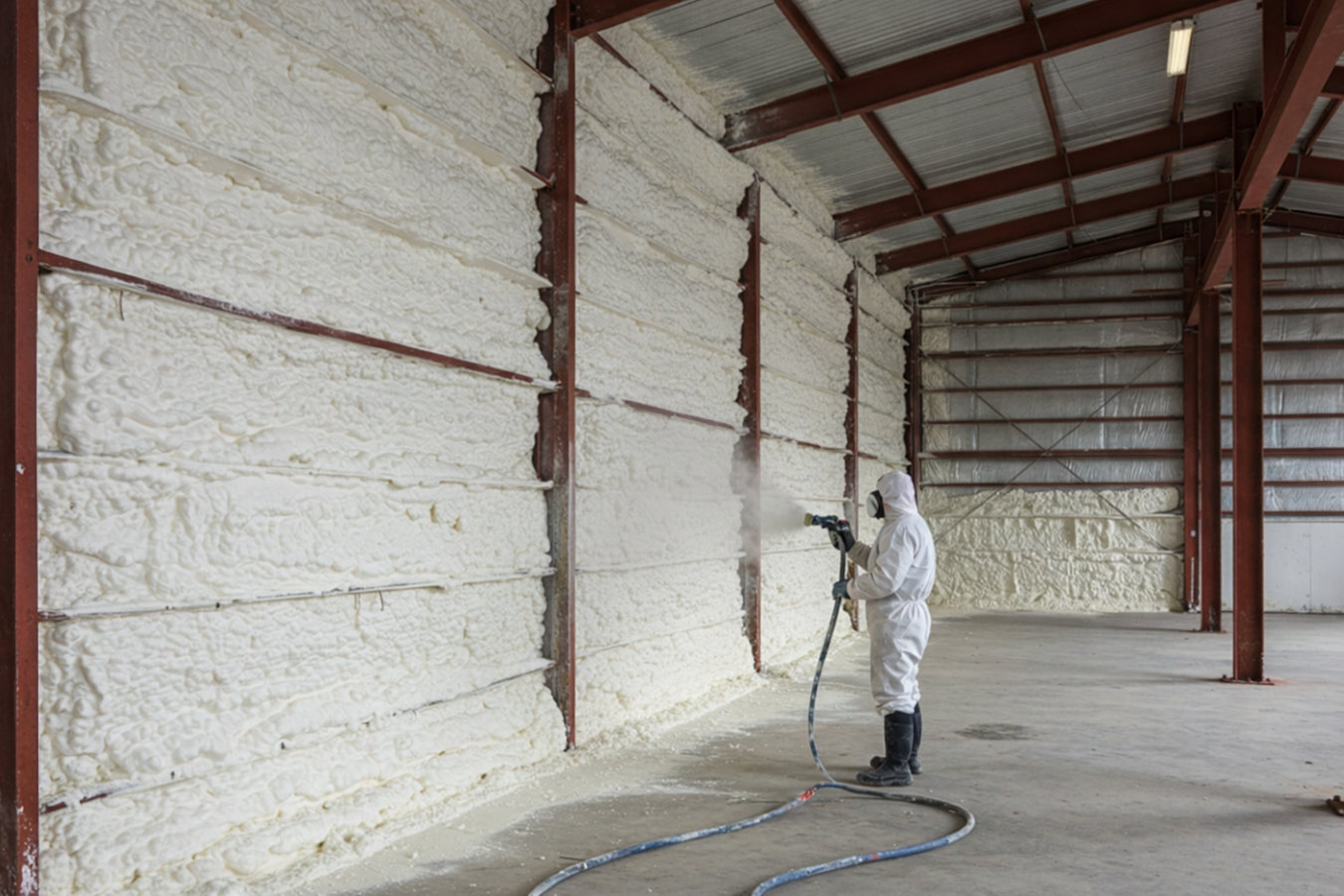
High-performance spray foam that seals and insulates in one step for maximum energy efficiency.
Learn moreKeep your home comfortable year-round with professional attic insulation installation.
Learn moreLoose-fill insulation blown into walls, attics, and cavities for complete, even coverage.
Learn moreWhole-home insulation solutions designed to reduce energy bills and improve comfort.
Learn moreSafe and thorough removal of old, damaged, or contaminated insulation from any area.
Learn moreInsulate your crawl space to prevent moisture, mold, and energy loss from below.
Learn moreRetrofit wall insulation improves thermal performance without major renovation.
Learn moreEliminate drafts and air leaks that undermine your insulation and raise energy costs.
Learn moreProperly insulated basements stay drier, warmer, and more energy-efficient all year.
Learn moreDense, rigid closed-cell foam delivers the highest R-value per inch and a vapor barrier.
Learn moreLightweight open-cell foam fills irregular cavities and provides excellent sound dampening.
Learn moreCommercial-grade insulation for offices, warehouses, and industrial facilities of any size.
Learn moreHeavy-duty vapor barriers block ground moisture and protect your crawl space structure.
Learn moreProfessional vapor barrier installation prevents condensation damage in walls and floors.
Learn moreSeal attic bypasses to stop conditioned air from escaping and unconditioned air from entering.
Learn moreAdd insulation to existing homes with minimal disruption using retrofit-friendly methods.
Learn moreCall Bettendorf Insulation at (563) 206-5388 or send us a message - we will schedule a free assessment at your Moline home or building and give you an honest answer about what the work will cost.