
Loading...
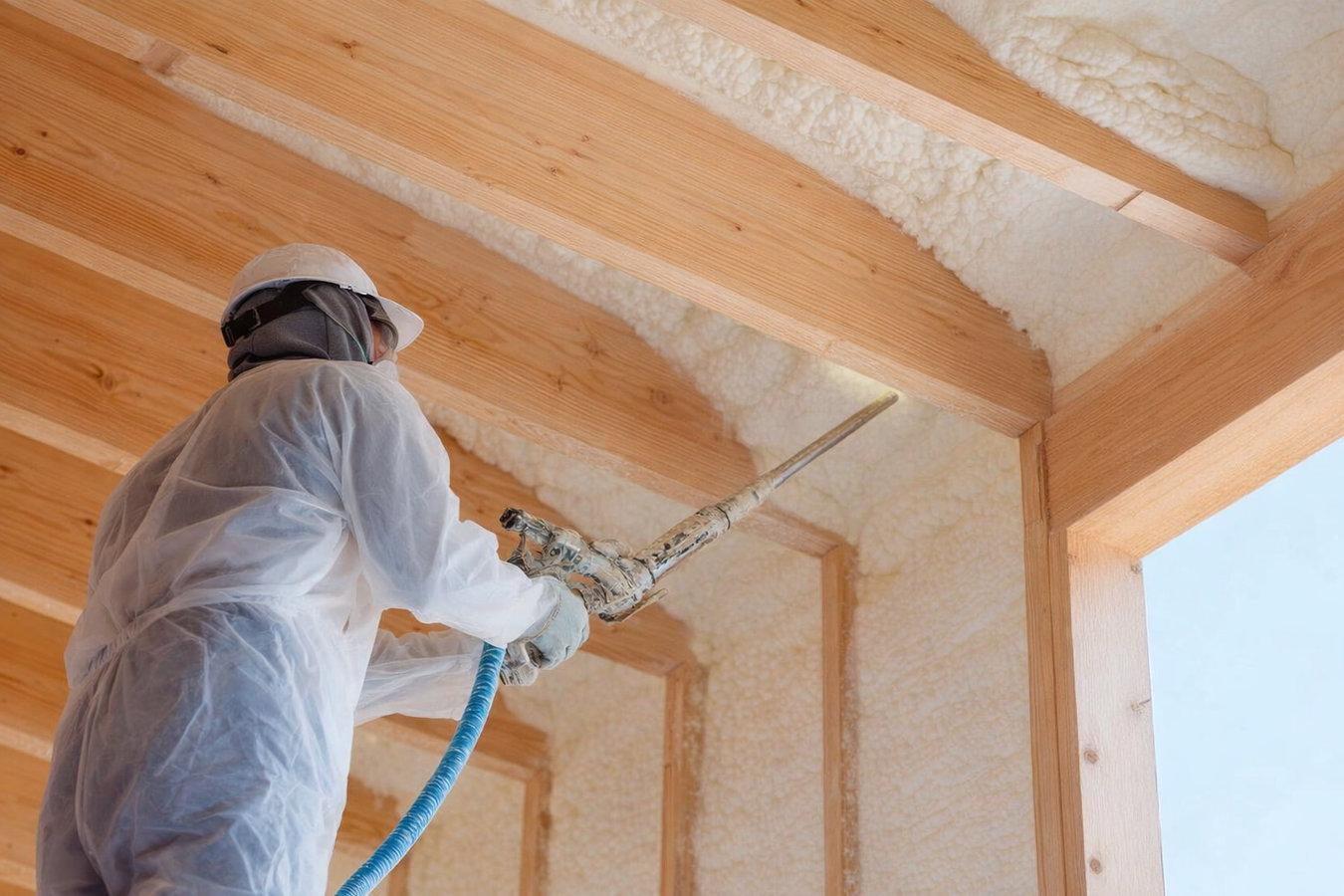
Iowa winters expose every gap in your home. Spray foam seals and insulates in one step - stopping drafts and cutting heating costs for good.
Spray foam insulation in Bettendorf seals air leaks and insulates at the same time - most attic and crawl space jobs are complete in a single day.
Bettendorf sits in Iowa's Climate Zone 5, where winter temperatures drop well below freezing and heating bills climb fast. Standard fiberglass batts slow heat transfer, but they can't stop drafts around pipes, wires, and framing gaps. Spray foam expands on contact and fills every gap, creating a continuous seal that keeps your conditioned air inside where it belongs.
Many older Bettendorf homes built in the 1960s through 1980s were never designed for today's energy standards. If your home has cold corners or high utility bills that fiberglass alone hasn't fixed, pairing spray foam with attic insulation is often the most effective first step.
If your gas or electric bills jump sharply from October through March and stay high even when you keep the thermostat steady, your home is likely losing heat through unsealed gaps. Bettendorf's cold winters expose those gaps in ways milder climates never would. Spray foam addresses the root cause rather than just compensating for it with more heat.
If one bedroom, a finished basement, or a room above the garage stays colder than the rest of the house, that space has an air leak or insulation gap nearby. In older Bettendorf homes this is especially common in rooms above a crawl space or sharing a wall with an unheated garage.
Hold your hand near an electrical outlet on an exterior wall on a cold day. If you feel moving air, your wall cavity has a gap. This is a classic sign of an older home with inadequate air sealing - exactly the kind of problem spray foam is designed to fix permanently.
Bettendorf's humid summers push moisture into uninsulated crawl spaces, causing musty odors and early signs of wood rot or mold. If you have noticed any of these when looking under your home, that crawl space needs attention. Closed-cell spray foam on the walls and rim joists is one of the most effective long-term solutions.
We install both open-cell and closed-cell spray foam across attics, crawl spaces, rim joists, basement walls, and exterior walls. Open-cell foam is softer and better suited for attics and interior spaces where moisture is not a primary concern. Closed-cell foam is denser, moisture-resistant, and the right choice for crawl spaces and rim joists in eastern Iowa's climate. Many Bettendorf homes benefit from a combination of both - closed-cell below grade and open-cell in the attic where cost efficiency matters more.
For homeowners dealing with energy loss across multiple areas of the house, we often recommend combining spray foam with closed-cell foam insulation in vulnerable lower-level areas. Every job includes a written estimate specifying foam type, coverage area, and expected depth before any work starts.
Best for attics and interior walls where sound dampening and cost efficiency matter most.
Best for crawl spaces, rim joists, and anywhere moisture resistance is essential.
Ideal for homes where blown-in alone has not solved the draft and ice dam problem.
The right call when eastern Iowa humidity is getting into your lower level and floor joists.
Bettendorf's position in the Quad Cities gives it the full range of Iowa weather - hard winters with temperatures regularly below zero and humid summers with dew points that push moisture into every unsealed gap. Homes closer to the river, many built in the 1950s and 1960s, were constructed long before modern energy codes existed. Those homes have decades of settling that have opened up air pathways fiberglass batts simply cannot address. Spray foam is the only material that expands on contact and fills those irregular gaps completely.
Homeowners in Davenport and Moline across the river face the same climate pressures. Iowa's building department requires permits for certain insulation work, and an experienced contractor handles that process so unpermitted work never becomes your problem when you sell the home or file a claim.
We ask a few basic questions - home age, the area you want insulated, and any specific problems you have noticed. We respond within 1 business day and most Bettendorf homeowners can get on the schedule within a week or two.
A technician visits and walks through the areas you want insulated. They check access, existing insulation, and any moisture issues that need to be addressed first. You get a written estimate specifying foam type, area, and cost - no surprises.
The crew arrives with their equipment and works through the designated areas. Most attic and crawl space jobs take four to eight hours. You do not need to be present - just plan to stay elsewhere for the day and the night after.
After 24 hours the foam is fully cured. Open windows and run fans briefly when you return. A good contractor walks you through the finished work - or sends photos - so you can confirm there are no thin spots or missed areas.
We respond within 1 business day. There is no obligation to hire us after your estimate. After you submit, someone from our office calls to schedule a free on-site assessment at a time that works for you.
(563) 206-5388We carry full liability insurance and workers' compensation on every project. You should never have a contractor in your home who cannot hand you a certificate of insurance - and we always can.
We live and work in the Quad Cities area. We know the housing stock, the climate, and the permit requirements at Bettendorf's building department. That local knowledge is not something a contractor driving in from two hours away can replicate.
When a project requires a building permit, we handle the application and schedule the inspection with the City of Bettendorf. You get documentation that the work was done to current standards - something that matters at sale time.
Every estimate specifies the foam type, the area to be covered, and the total cost. No surprises on invoice day. If the scope changes during the job, we communicate with you before proceeding.
Every one of those points connects to the same thing: you should feel confident about who is in your home and what they are doing. Spray foam is a permanent installation - it matters that the job is done right the first time.
Add the right depth of blown-in or batt insulation to your attic and pair it with spray foam air sealing for the most complete thermal barrier.
Learn moreThe moisture-resistant, high-density option for crawl spaces, rim joists, and anywhere eastern Iowa's humidity is a real concern.
Learn moreFree estimates, fully insured, serving all of Bettendorf and the Quad Cities - call today before the schedule fills up.