Loading...
Cold rooms, high heating bills, and ice dams on the roof are fixable problems. We insulate attics, walls, crawl spaces, and basements for Bettendorf homeowners who are done overpaying every winter.
Home insulation in Bettendorf slows the movement of heat through your attic, walls, floors, and crawl space - most whole-home projects are completed in one to two days. Insulation slows heat transfer while air sealing stops drafts, and the two are most effective when done together. If your home was built before 1980 and has never had insulation work done, there is a reasonable chance it is under-insulated by today's standards, and you are paying for that gap on every MidAmerican Energy bill.
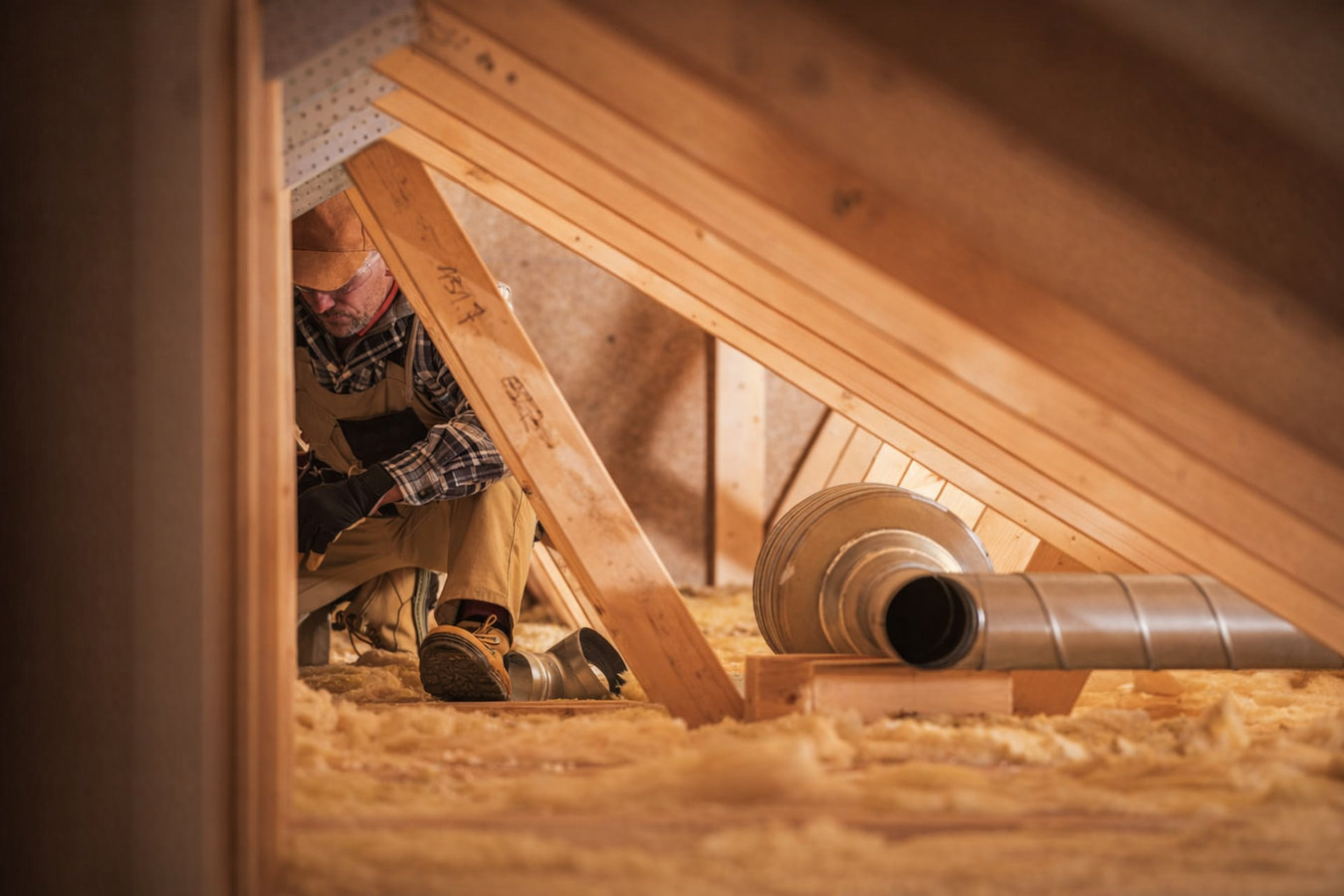
For many homeowners, the attic is the right starting point because that is where the biggest heat loss happens in winter. We offer insulation removal when old material is wet, moldy, or contaminated before new work begins, and we can follow removal with fresh installation in the same visit. If you are also thinking about upgrading existing insulation that is simply old but intact, our retrofit insulation service covers exactly that situation.
If your gas or electric bill climbs sharply during Bettendorf's coldest months without any change in thermostat habits, heat is likely escaping through the attic or walls faster than your furnace replaces it. You can get a rough read by standing in different rooms on a cold day - noticeably colder rooms or cold floors above a basement or crawl space point toward an insulation gap.
Hold your hand near an electrical outlet on an exterior wall during a cold winter day. If you feel cool air moving, that is a sign air is traveling through gaps in the wall cavity. The same test applies to your attic hatch edges. Bettendorf winters are cold enough that even small drafts add up to real discomfort and real cost.
Ice dams - ridges of ice that build up at the eaves after a snowfall - form when heat escapes through the attic and melts roof snow unevenly. Bettendorf's freeze-thaw cycles make this a common and recurring problem. Left alone, ice dams push water under shingles and into your ceiling. Better attic insulation and air sealing is the long-term fix, not just chipping the ice away each winter.
If you notice a musty smell in your basement or see moisture on crawl space walls after a wet spring, insulation in those areas may be absorbing moisture or missing entirely. Bettendorf's proximity to the Mississippi River means ground moisture is a real factor here. An uninsulated crawl space lets that dampness travel into your floors and living areas over time.
Most homes have more than one area that needs attention. We start with a full assessment - attic, walls, basement, and crawl space - and explain what we find before recommending anything. The most common type for attics is blown-in loose fill, which fills irregular spaces and corners that batts cannot reach. For areas with moisture concerns, we recommend moisture-resistant materials and vapor barriers. Every job includes air sealing, because adding insulation without sealing the gaps underneath is like wearing a coat with the zipper open.
For homes with old or damaged material that needs to come out first, we handle insulation removal and re-installation as a single coordinated project. For older homes where original insulation is still intact but below current recommended levels, our retrofit insulation service adds coverage without tearing out what is already there. We will tell you which approach makes sense for your home and explain the reasoning in plain terms before any work begins.
The most common starting point - blown-in or batt material installed to current recommended R-values for Iowa's Climate Zone 5.
Dense-pack or blown-in material added through small holes in walls that were never insulated, especially in pre-1980 homes.
Insulation and vapor barrier work suited for homes near the river where ground moisture is a factor.
Rigid or spray foam applied to basement walls or rim joists to stop cold air infiltration from below.
Closing gaps around lights, pipes, and framing before insulation goes in - the step that makes everything else perform correctly.
Adding new material on top of existing insulation that is still in good condition but below recommended depth.
Bettendorf sits in Iowa's Climate Zone 5, where winter temperatures regularly drop below zero and the heating season runs from October through April. The Department of Energy recommends attic insulation levels well above what most homes built here before 1990 actually contain. Many of Bettendorf's established neighborhoods - particularly those developed in the 1950s through 1970s near the river - were built when insulation standards were far lower. Homeowners in those areas are often good candidates for an upgrade, and the energy savings when starting from a thin baseline tend to be substantial.
Moisture is a secondary but real concern. Bettendorf's position along the Mississippi River means higher humidity levels in spring and summer, and crawl spaces here deal with more ground moisture than homes in drier parts of Iowa. We serve homeowners across the Quad Cities, including Davenport, IA and Rock Island, IL, and we know the conditions that make each area different from the next.
We respond within 1 business day. We will ask about your home's age, which areas concern you, and what you have noticed - high bills, drafts, or moisture. No commitment is required to reach out.
A crew member walks through your home and looks at the attic, walls, basement, and crawl space. They measure what is already there, check for air leaks and moisture, and explain what they find in plain terms before recommending anything. This visit takes 30 to 60 minutes.
You receive a written quote covering work, materials, and total cost. Ask whether air sealing is included - it should be. This is also the right time to ask whether materials qualify for MidAmerican Energy rebates and the federal tax credit.
Most attic jobs finish in a few hours. The crew seals air gaps first, then installs insulation. They clean up before leaving and walk you through what was done. There is no curing period - your home is ready to use immediately, and you keep all paperwork for any rebate or tax credit claims.
No obligation and no pressure. We respond within 1 business day, visit your home for free, and give you a written quote that covers everything - materials, air sealing, and total cost. You keep all documentation for rebate and tax credit claims.
(563) 206-5388We work in Bettendorf and the surrounding Quad Cities - not dispatched from somewhere else. That means we know the local housing stock, the Scott County permit process, and which MidAmerican Energy rebates are currently active. You are talking to people who have been in homes across this city.
Insulation without air sealing is only half the work. We seal gaps around lights, pipes, and framing before any material goes in, because those gaps are where warm air escapes regardless of how thick the insulation above them is. That step is included in every quote - not charged as an add-on.
Iowa's Climate Zone 5 calls for attic insulation in the R-49 to R-60 range. We install to those targets because that is what Bettendorf winters actually demand. A lower number might look better on paper but will not perform through February. We explain target R-values and what they mean for your home during the estimate.
MidAmerican Energy offers rebates for qualifying insulation upgrades, and the federal government currently provides a tax credit covering up to 30% of project cost. We know which materials qualify and document the work so you can claim both without extra effort on your end. That guidance costs you nothing extra.
Combined, those four things mean your project is scoped correctly, installed to the right standard, and documented for every dollar of savings you are entitled to. Have a question before you are ready for an estimate? Call us directly - we are happy to give you a straight answer.
For independent guidance on insulation types and R-value targets, the ENERGY STAR home sealing and insulation guide is a good starting point. For information about rebates and tax credits, check MidAmerican Energy's rebate program page before you get quotes. Or call us and we will walk you through it.
Safe removal of old, wet, or contaminated insulation before new material is installed - handled as a single project.
Learn moreAdding new insulation on top of existing material that is still in good condition but below current recommended levels for Iowa winters.
Learn moreEstimates are free, scheduling fills up quickly in fall, and most jobs are finished within a week of your call.