Loading...
Cold walls are costing you money every winter. We insulate existing Bettendorf walls without removing your drywall - one day, done right.
Wall insulation in Bettendorf slows heat from escaping through your exterior walls in winter and keeps summer heat out - most blown-in jobs on existing homes are complete in a single day without touching your drywall.
A large share of Bettendorf homes were built in the 1950s through the 1980s, when wall insulation was minimal or skipped entirely. If your home is more than 30 years old and has never had wall insulation added, the exterior wall cavities may be empty. That means every cold January night, heat your furnace produced is simply passing through your walls to the outside.
Wall insulation works best as part of a complete thermal envelope. Pairing it with air sealing services closes the drafts that insulation alone cannot fix, and together they address the two main ways older Bettendorf homes lose heat.
Bettendorf winters are long and cold, with stretches of below-zero nights that push furnaces to run almost constantly. If your heating bill feels too high for the size of your home - or if it has crept up year after year - poorly insulated exterior walls are one of the most common causes. Touch the interior surface of an exterior wall on a cold day: if it feels cold, heat is escaping through that wall.
If one bedroom is always freezing in winter or one side of the house stays hot in summer no matter how you set the thermostat, the walls in that area are likely the problem. This is especially common in Bettendorf homes built in the 1960s and 1970s, where insulation was often inconsistent from room to room. A room that never gets comfortable is a room losing heat through its walls.
Hold your hand near an electrical outlet or light switch on an exterior wall on a windy day. If you feel cool air moving, the wall cavity is connected to the outside. This is a clear sign the wall has gaps - either no insulation or insulation that has settled and left voids at the top of the cavity. It is fixable without opening the wall.
A large portion of Bettendorf's neighborhoods were built before 1990, when wall insulation was minimal or skipped in some construction. If you have no record of insulation work, or if you bought an older home without knowing its history, it is worth having a contractor assess what is actually in your walls. Many homeowners find the cavities are empty.
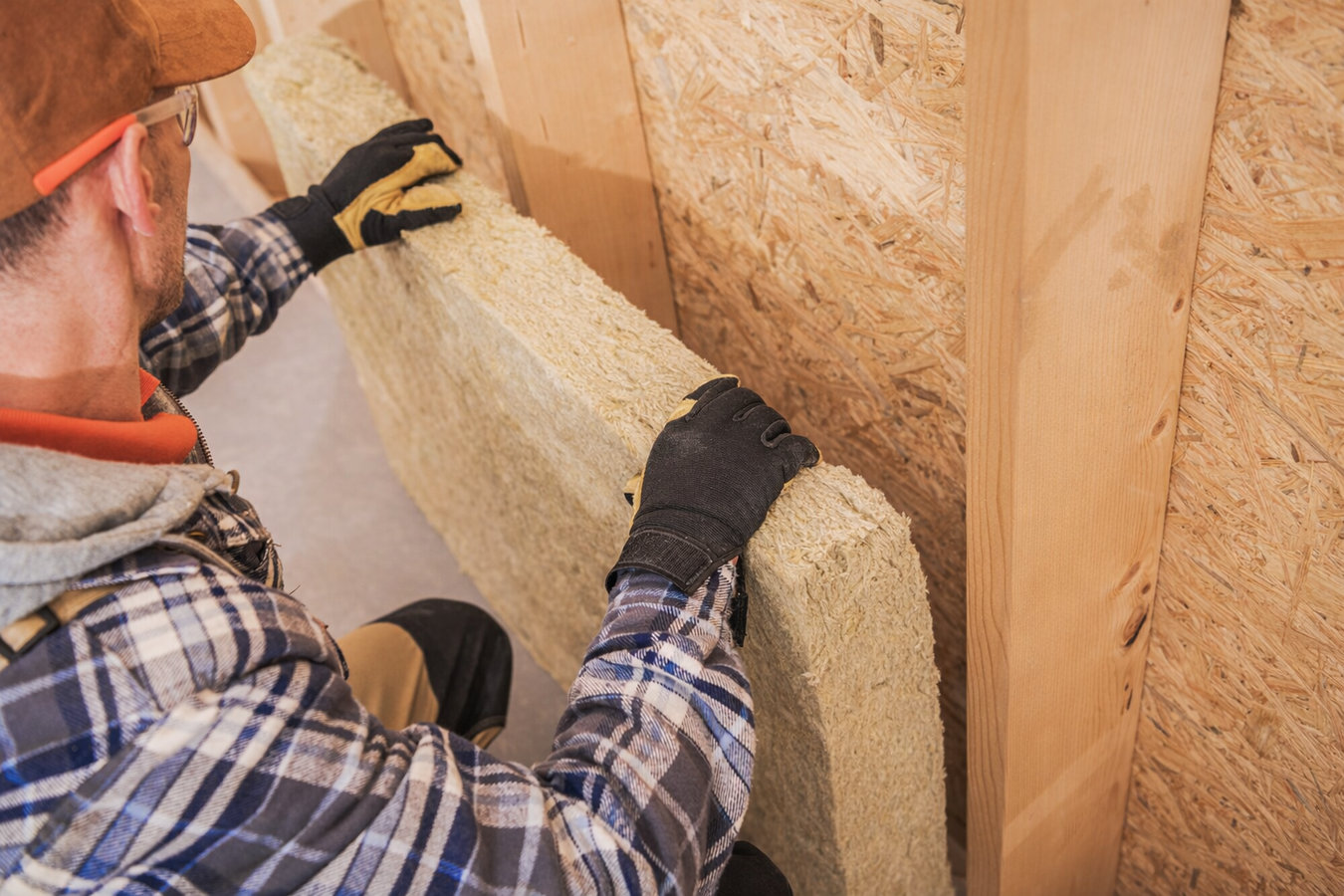
We install wall insulation in finished homes using the blown-in dense-pack method and in open walls during renovation using batt installation. For most Bettendorf homeowners with finished walls, blown-in work is the right approach - it requires no demolition, fills every cavity completely, and is done in a day. We drill small holes from the exterior, pack each cavity with insulation until it is full, then patch and finish every hole before we leave.
Many homeowners ask about combining wall insulation with spray foam insulation in problem areas like rim joists and crawl spaces. That combination addresses heat loss from the walls and the bottom of the house at the same time, which makes a noticeable difference in Iowa winters. Every job starts with a written estimate specifying what walls will be treated, what material will be used, and the full cost.
Best for existing finished walls - no drywall removal, usually done in a single day.
Best for open walls during a renovation, addition, or gut remodel.
For older Bettendorf homes where insulation history is unknown - we check before quoting.
For homes where drafts persist even after insulation - sealing and insulating together delivers the biggest comfort improvement.
Bettendorf sits in Climate Zone 5, where winter temperatures regularly drop below zero and summer heat pushes into the 90s. That wide swing - sometimes more than 100 degrees between the coldest and hottest days of the year - means your walls are working hard in both directions. Homes near the river, many built in the 1950s and 1960s, were constructed when wall insulation requirements were far less demanding than they are today. Mississippi River humidity also creates a moisture risk in uninsulated wall cavities during summer, making material choice and vapor management part of every job we do here.
We work on homes throughout the area, including older neighborhoods in Davenport and newer subdivisions in East Moline. Whether your home is a mid-century brick ranch near the river or a vinyl-sided two-story from the 1990s, the approach is tailored to your wall construction. The U.S. Department of Energy recommends that homeowners in Climate Zone 5 insulate wall cavities to at least R-13, and many older Bettendorf homes have nothing.
We ask a few basic questions about your home - age, size, and what you have noticed. We respond within 1 business day and schedule a visit at a time that works for you. Most Bettendorf homeowners can get on the schedule within one to two weeks.
A technician walks your exterior and interior, checking wall construction, home age, and any moisture concerns. You receive a written estimate naming the walls to be treated, the material, and the full cost - before any commitment is made.
The crew drills small holes along the exterior walls, fills each cavity until it is completely packed, then patches every hole. Most Bettendorf homes are done in a single day. You do not need to leave - there is noise and minor dust, but the disruption is far less than most homeowners expect.
Before leaving, the crew walks the exterior with you to show the patched holes. Patches need a day or two to cure before painting. You should notice a difference in how your home holds temperature within the first heating or cooling cycle after the work is done.
We respond within 1 business day. There is no obligation after your estimate. Someone from our office will call to schedule a free on-site assessment at a time that works for you.
(563) 206-5388Every wall insulation job comes with a written estimate that names the walls, the material, and the total cost. You know exactly what you are paying for before the crew shows up. No surprises on the bill.
We handle blown-in work from the exterior only. Your drywall, paint, and interior trim are never touched. The patched holes are small and blend in well once painted - most neighbors never notice the work was done.
When a permit is needed through the City of Bettendorf Building and Development Services office, we handle the application. Permitted work is inspected and on record, which protects you when you sell your home.
We work on Bettendorf homes regularly - from 1950s brick ranches near the river to 1990s two-stories in newer subdivisions. We understand how Mississippi River humidity affects vapor management in walls and select materials accordingly. The federal tax credit for insulation covers up to 30 percent of qualifying material costs and we can walk you through the documentation.
Older Bettendorf homes respond well to wall insulation precisely because the cavities are often empty. When the material goes in for the first time, the difference in comfort and heating cost is immediate and lasting. The Building Performance Institute trains contractors to treat the home as a system - so air sealing, moisture control, and insulation work together rather than against each other.
Close the drafts that insulation alone cannot stop - outlets, rim joists, and attic penetrations.
Learn moreThe right material for crawl spaces and rim joists where moisture resistance matters more than cost.
Learn moreFall is the most popular time for wall insulation work in Bettendorf - schedules fill quickly. Call now to lock in your installation date and be ready before the cold sets in.