
Loading...
Bettendorf Insulation is an insulation contractor serving Rock Island, IL with blown-in insulation, attic insulation, and crawl space insulation - and our experienced crew has been working across Rock Island since 2024, including the Victorian and Craftsman homes near Longview Park that need a contractor familiar with pre-1940 construction.
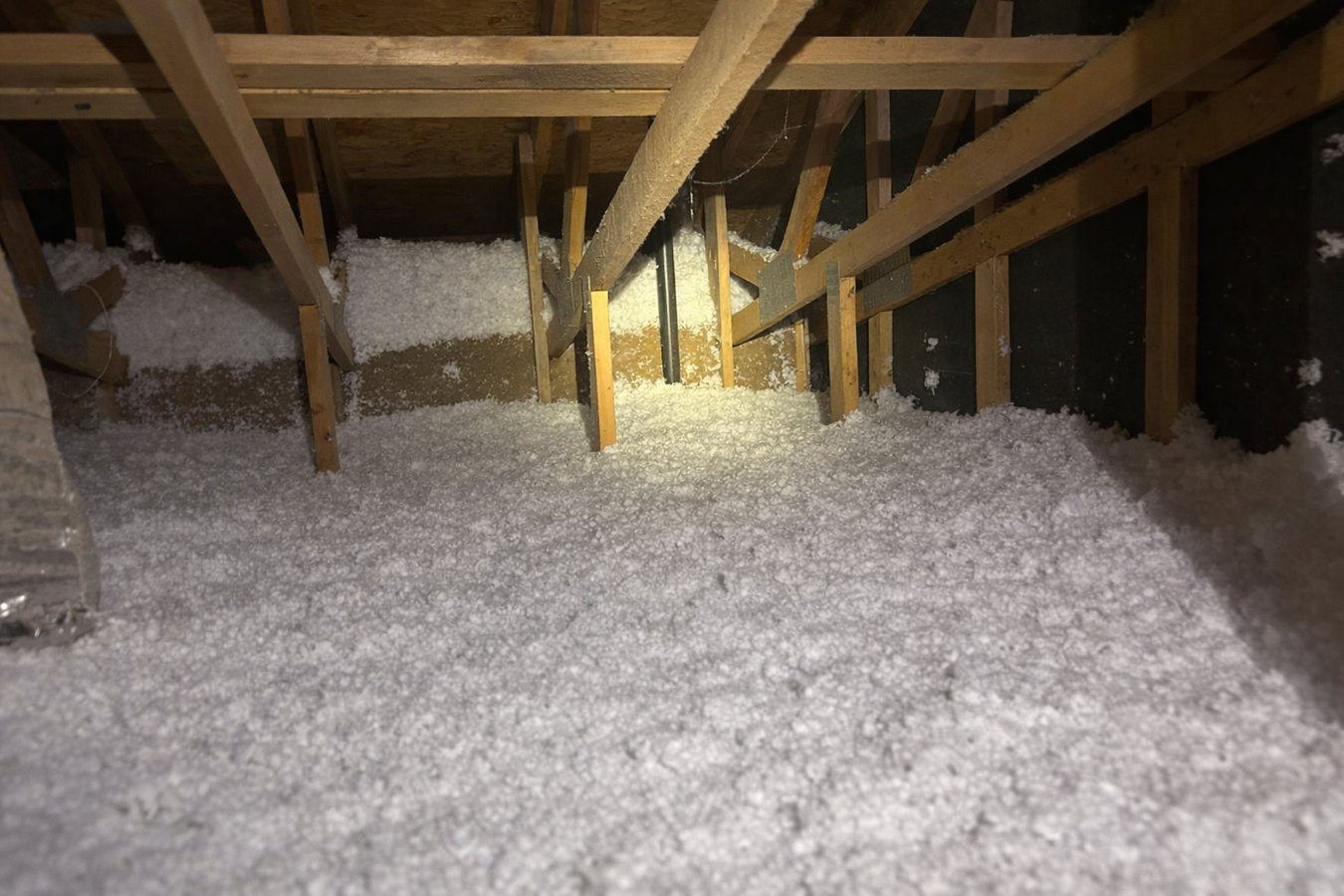
A large share of Rock Island homes were built before 1940, and their attics often have original insulation that has settled to a fraction of its starting depth over the decades. Our blown-in insulation service adds material right over what is already there - no removal required in most cases - and fills the irregular corners and framing gaps that older Rock Island attics tend to have. Most jobs wrap up in a few hours with no disruption to the rest of the house.
Ice dams form on Rock Island rooflines every winter when heat escapes through thin attic insulation and melts snow unevenly. The Department of Energy recommends R-49 to R-60 for this Illinois climate zone - well above what most pre-1960 homes in Rock Island actually have. Upgrading attic insulation addresses the root cause of ice dams and typically delivers the largest single reduction in a Rock Island homeowner's winter heating bill.
Rock Island sits directly on the Mississippi River, and the clay-heavy soil throughout this part of the Quad Cities holds water against foundations long after the rain stops. Elevated groundwater during wet springs pushes humidity into uninsulated crawl spaces. Insulating and sealing this area keeps floors warmer in winter and prevents the damp conditions that cause wood framing to deteriorate over time in Rock Island homes near the river.
The Victorian and Craftsman homes near Longview Park and along the 7th Avenue corridor have framing from the late 1800s and early 1900s - gaps around pipes, beams, and wall tops that standard batts cannot seal. Closed-cell spray foam fills and seals those gaps in one step, and because it does not absorb water, it is the right choice for rim joists and crawl space walls in Rock Island homes where moisture is a year-round concern.
Nearly every Rock Island home built before 1970 has a full basement, and those basement walls face consistent pressure from the city's clay soil holding water after heavy rain. Insulating basement walls with moisture-appropriate materials reduces heat loss in winter and limits the humidity that encourages mold growth during Rock Island summers - which are hot and sticky even when the Mississippi is running at normal levels.
Rock Island homes from the Victorian and Craftsman era have decades of settled framing that creates gaps around plumbing, electrical, and wall tops that insulation alone cannot fix. Air sealing closes those paths before any insulation goes in - and for homes in this part of the Quad Cities, where winters are genuinely cold, the combination of air sealing and insulation delivers far better results than insulation by itself. Homeowners usually feel the difference the first winter after the work is done.
Rock Island winters follow the same pattern as the rest of the Quad Cities - temperatures that regularly drop below 10 degrees, ground that freezes solid and stays that way for months, and 25 to 30 inches of snow per season. The repeated freeze-thaw cycles from January through March are hard on any building, cracking concrete and working moisture into foundations that have already been through decades of this same cycle. A home built in 1910 or 1930 has been absorbing that punishment for a long time, and insulation that was minimal to begin with has often settled or degraded further since then.
The proximity to the Mississippi River adds a moisture dimension that inland Illinois communities do not deal with in the same way. Rock Island has seen significant flooding events, including major high-water years in 1993 and 2019, and even in quieter years, elevated groundwater during spring snowmelt pushes humidity into basements and crawl spaces throughout the city. The clay-heavy soil does not drain that water quickly - it holds it against foundations and below-grade walls until conditions dry out. An insulation contractor working in Rock Island needs to think about vapor management alongside thermal performance, not as a secondary concern but as part of every job below ground level.
Our crew works regularly with the City of Rock Island Building Inspection Department on permitted projects, so we know what requires a permit here and can confirm that before work begins rather than after. Rock Island is home to the Rock Island Arsenal, a major employer on the island in the Mississippi River, and many of the steady working households connected to the Arsenal live in Rock Island neighborhoods that have been maintained and improved by long-term owners for generations.
We know Rock Island's neighborhoods from the work we do in them. The homes near Longview Park on the north side tend to be larger, older, and well-kept - Victorian and Queen Anne styles with full basements and steep rooflines that require specific handling. The blocks closer to Schwiebert Riverfront Park and downtown hold a mix of older brick homes and smaller wood-frame properties, some now split into rentals, each with its own set of access challenges. We serve both individual homeowners and landlords managing multiple units in this city.
We cover the entire Quad Cities area, including East Moline, IL just to the north and Moline, IL next door, so if you have neighbors in either city who need insulation work, we are already on these streets regularly.
We start with a few quick questions - the age of your Rock Island home, what area you want insulated, and what is prompting you to call. Knowing whether you have a Victorian near Longview Park or a smaller bungalow closer to downtown helps us bring the right tools and approach. We respond within 1 business day.
A technician visits your home to look at the actual space - attic, crawl space, basement walls, or rim joists. For older Rock Island homes, this step matters more than in newer construction, because the framing layout and access points vary significantly from house to house. The assessment is free and takes 30 to 60 minutes. We also note any moisture conditions that could affect material selection below ground level.
After the assessment, you get a written quote that covers what will be done, what materials will be used, and the total cost. We confirm upfront whether your project requires a permit through the City of Rock Island Building Department and handle the application on your behalf if it does - that cost is included in your quote, not added later.
The crew arrives, sets up, and completes the work. For attic jobs, the machine stays outside and the hose runs through the access hatch. For crawl space and basement work, we protect surrounding areas before starting. Most residential jobs finish in one day. At the end, we walk you through what was done and leave the space clean. There is no curing time - the home benefits from the new insulation immediately.
We serve Rock Island, IL and the wider Quad Cities area. Free estimates, experienced crew, and honest answers about what your older home or rental property actually needs.
(563) 206-5388Rock Island is a city of around 36,000 people on the western Illinois bank of the Mississippi River, sitting at the center of the Quad Cities metro area. The city has been settled since the mid-1800s, and its neighborhoods reflect that history - a large share of homes date to before World War II, with brick and wood-frame construction, full basements, and the character of a place where families have owned properties across generations. Homeownership rates run relatively high for a city this size, around 55 to 60 percent, and the presence of the Rock Island Arsenal as a major employer has kept a stable base of working households in the community for decades. The Arsenal itself sits on an island in the Mississippi and has operated continuously as a military manufacturing facility since the Civil War era.
The residential neighborhoods range from the larger Victorian and Queen Anne homes near Longview Park in the north - with its golf course and small zoo - to the smaller bungalows and two-flats that fill the blocks closer to downtown and the Schwiebert Riverfront Park along the Mississippi. The 7th Avenue corridor runs through some of the city's most established neighborhoods and is lined with homes that have been carefully maintained over many decades. Rock Island borders Moline, IL to the north and East Moline, IL further north along the river - and we serve homeowners across all three cities.
High-performance spray foam that seals and insulates in one step for maximum energy efficiency.
Learn moreKeep your home comfortable year-round with professional attic insulation installation.
Learn moreLoose-fill insulation blown into walls, attics, and cavities for complete, even coverage.
Learn moreWhole-home insulation solutions designed to reduce energy bills and improve comfort.
Learn moreSafe and thorough removal of old, damaged, or contaminated insulation from any area.
Learn moreInsulate your crawl space to prevent moisture, mold, and energy loss from below.
Learn moreRetrofit wall insulation improves thermal performance without major renovation.
Learn moreEliminate drafts and air leaks that undermine your insulation and raise energy costs.
Learn moreProperly insulated basements stay drier, warmer, and more energy-efficient all year.
Learn moreDense, rigid closed-cell foam delivers the highest R-value per inch and a vapor barrier.
Learn moreLightweight open-cell foam fills irregular cavities and provides excellent sound dampening.
Learn moreCommercial-grade insulation for offices, warehouses, and industrial facilities of any size.
Learn moreHeavy-duty vapor barriers block ground moisture and protect your crawl space structure.
Learn moreProfessional vapor barrier installation prevents condensation damage in walls and floors.
Learn moreSeal attic bypasses to stop conditioned air from escaping and unconditioned air from entering.
Learn moreAdd insulation to existing homes with minimal disruption using retrofit-friendly methods.
Learn moreCall Bettendorf Insulation at (563) 206-5388 or send us a message - we will schedule a free assessment at your Rock Island home and give you a straight answer about what the work involves and what it will cost.